The AI trade is no longer just Nvidia — the power stack is where the next winners sit
AI demand is still real, but this week’s tape says the market is starting to care less about who sells the chips and more about who can power, cool, and house them. After Nvidia’s strong-but-muted print, the sharper signal came from infrastructure deals tied to electricity, grid capacity, and data-center buildout.
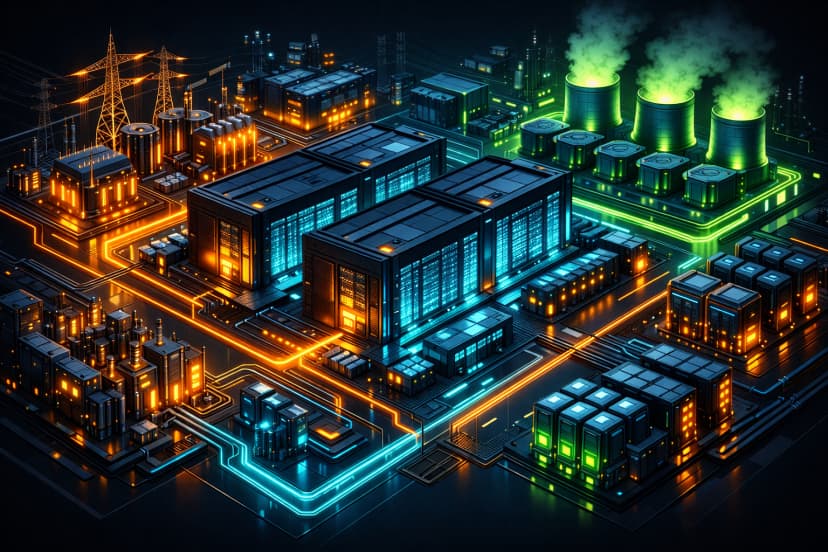
The market is still talking about AI like it begins and ends with GPUs. We think that framing is getting stale. Nvidia’s May 20 results were strong enough to confirm that AI demand remains intact, yet the stock reaction was muted relative to the scale of the beat — a sign that the obvious part of the trade is now crowded. The more interesting move this week came from the physical layer beneath AI: power, cooling, utility capacity, and the infrastructure that makes high-density compute usable at all.
That matters because AI is no longer constrained only by access to chips. It is constrained by whether those chips can be deployed at scale without running into power shortages, thermal limits, or grid bottlenecks. Nvidia itself helped make that case. Around the same stretch as its earnings, the company backed IREN in a deal tied to as much as 5 gigawatts of infrastructure and up to $2.1 billion of investment. That is the market’s tell: even the company at the center of the AI boom is leaning into capacity, not just compute.
The valuation setup reinforces the shift. NVDA still looks exceptional on growth, with revenue growth of 65.5%, EPS growth of 66.0%, and a 63.0% net margin, all while trading at 33.57x earnings. But that is exactly why the reaction function is changing: the business is so dominant, and expectations are so high, that another huge quarter no longer guarantees a fresh rerating. By contrast, the market is increasingly willing to pay up for the bottlenecks around AI deployment because those bottlenecks are becoming more visible in real time.
Take VRT first. Vertiv is not cheap at 84.18x earnings, and that alone tells you the market has already identified cooling and power management as scarce assets in the AI buildout. But unlike a pure narrative stock, it has operating momentum behind it: first-quarter revenue rose 30% year over year to $2.65 billion, and management raised full-year expectations. That combination matters. If Nvidia is the proof that AI demand exists, Vertiv is the proof that the demand is now spilling into the equipment required to keep denser racks running without breaking the economics of the data center.
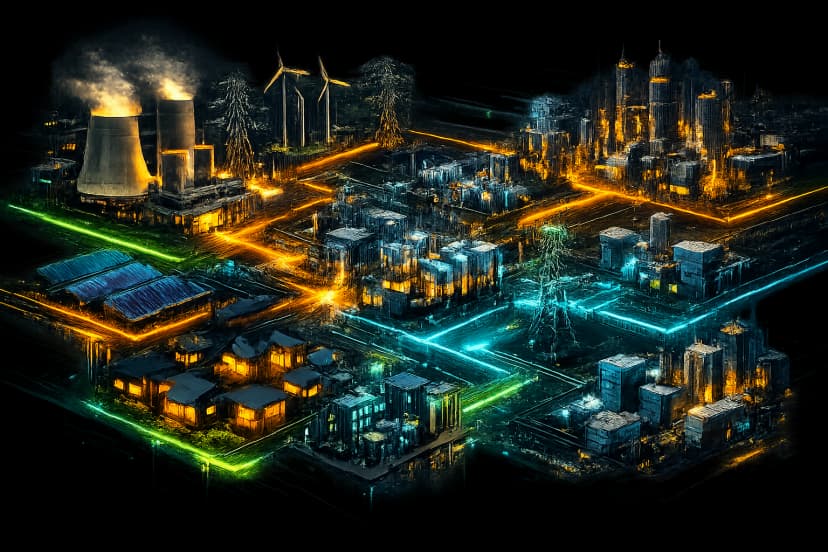
The utility side may be even more important because it broadens the AI trade beyond the usual technology winners. NEE buying D in a $66.8 billion all-stock deal is not just a utility merger; it is M&A-scale validation that electricity demand from data centers is becoming investable in its own right. NextEra has already said it expects to build 15 to 30 gigawatts of new generation capacity for U.S. data centers by 2035. That is the kind of multi-year signal equity markets usually reward early, because once the grid and generation conversation moves from theory to committed capital, the winners are no longer only semiconductor names.
Yes, bulls can fairly argue that NVDA still owns the profit pool and remains the cleanest AI exposure. We agree that the demand picture from its latest quarter does not look broken. But that is not the same as saying it is the only place left for upside. When the category leader posts enormous numbers, announces an $80 billion buyback, and still gets a shrug, the message is usually that investors are looking for the next underappreciated choke point rather than paying ever more for the incumbent champion.
That is also why ETN and SMCI should be separated rather than lumped together as generic AI infrastructure. Eaton is a broad industrial power-management company, not a pure AI vehicle, and that is exactly the appeal: it raised 2026 organic growth guidance to 10% from 8% at the midpoint, showing that data-center demand is beginning to matter even inside diversified industrial models. SMCI, by contrast, screens optically cheap at 17.03x earnings and just 0.58x sales, with 46.6% revenue growth, but its 3.7% net margin tells you why the market is cautious. It sits closer to the compute box than the power bottleneck, and that leaves it more exposed to execution and margin pressure than the names controlling electricity, cooling, and load management.
IREN is the more speculative version of the same thesis. Its 167.7% revenue growth and 31.7% net margin show why the stock has drawn attention, but the important point is not the multiple. It is that Nvidia’s involvement effectively underlines where scarcity is moving. AI infrastructure is becoming a site-selection and power-availability story. Once that happens, the market starts rewarding whoever can secure megawatts, cooling capacity, and physical deployment timelines — not just whoever can ship the next accelerator.
The cleanest way to frame the next leg of AI is this: the first phase rewarded the companies that made compute possible, and the next phase is rewarding the companies that make compute usable. That does not mean semiconductors stop working. It means the market is broadening from the obvious winner to the enabling stack underneath it.
Our verdict is that investors should stop treating AI as a single-ticker semiconductor trade. The better read on this week’s tape is that the bottlenecks have moved into the real world: power supply, cooling systems, grid access, and data-center infrastructure. What would change our mind is simple: if Nvidia resumes driving outsized stock reactions on every beat while utility and infrastructure names stop converting AI demand into backlog, guidance, and deal activity, then this reframe is premature. For now, the evidence points the other way, and the power stack looks like where the market is hunting for the next winners.
Our take, not advice. This is opinion commentary — informational only, not personalized investment recommendations. Markets carry risk. Do your own research and consider your own situation before any trade.
▌The Daily Briefing · Free
A new stock idea, every evening.
One stock worth watching each weekday, plus the analysis behind it. Free, in your inbox.